
Educational Resources
Sleep Strategies
Herbs can be very helpful in promoting a deep and restorative sleep. Most plants used for this purpose are in the 'nervine' category of plants: herbs that effect the nervous system. Even though we speak of herbs in general terms regarding their effects on people, it is always an individual case. This is especially true with nervine herbs. My own personal favorite herb combination for improved sleep is equal portions of Skullcap (Scutellaria laterifolia) and Passionflower (Passiflora incarnata) tincture. Take a small amount in the evening when the day’s work is done and a slightly larger amount again at bedtime. […] See More
Edible v. Palatable
More on the topic of wild foods... Over the years, I have gone through many sources of information for wild edibles. Initially, most were academic oriented and more concerned about recording vanished lifestyles than providing practical information for current readers. The past few years have seen more information on what is available for harvesting and eating in the modern world. There is one fault I see in both information sources. There is a big difference between a food that is edible and one that is actually palatable. I have come to the conclusion that 'edible' in this context simply means […] See More
The Wild Greens of Spring
April in northern Arizona... the plant world is slowly waking up, green eager to show its face above the ground after many months of absence. Quick moving snow storms sweep across the landscape for a few more weeks, the greens teasing us with possibilities, the snow forcing us to be patient. Many people are interested in wild foods; wanting to either connect with nature, increase their nutrient intake or even ‘live off the land’. While enthusiasm is wonderful, some guidelines are essential. I want to share two of these today. The first rule is to be 100% absolutely sure of […] See More
Making Herbal Honey
Many people know honey as a healthier alternative to white sugar. While this is true, it can also be used as a way to extract, preserve and carry herbs into the body. I find honey to be especially convenient to use with powdered herbs. Some common powders are Tulsi, ginger, hawthorn, cinnamon and licorice. Making an herbal honey is fairly straightforward and the recipe is open to personal preferences. All given amounts are general. Use a wide mouth 8 oz. canning jar. Fill half full with the powdered herb of choice. The honey needs to be pre-warmed so that it […] See More
Active or Passive Healthcare?
A key difference between mainstream and herbal medicine is the concept of passive vs. active consumers. Many people I know who choose to use mainstream healthcare pay little to no attention to their diet, lifestyle or stress level. They go through life until they get sick, then go to the doctor with the attitude the doctor will make them better. This usually involves a pill of some type. I consider these people to be passive consumers. They make little to no effort to be informed about a healthy lifestyle. They view the doctor as having all the power and knowledge. […] See More
Using Herbs with Children: Where is the “Line”?
Every parent has a "Line" when using herbs with children. Crossing the Line means that outside help is required, whether it be a professional herbalist, a naturopath or an MD. It is important to acknowledge the Line and to think about where it is. Various factors effect the position of the Line and it is different in each situation. Two issues to consider are: Where is the nearest hospital or urgent care facility? Travel time to outside help plays a role in how soon one makes that decision. Five minutes to an urgent care facility is very different than the […] See More
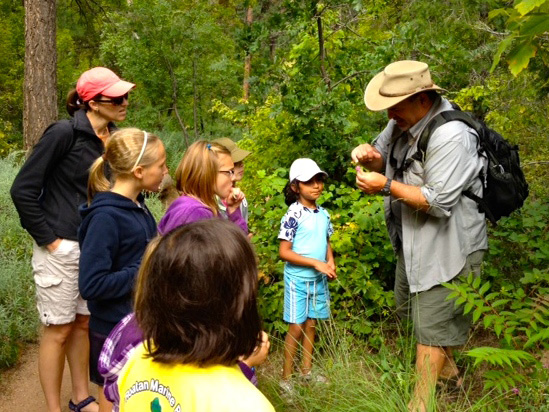
Children and Herbs: Just Tasting Good is Not Enough
One of the challenges of children swallowing a tea, capsules or tincture is that herbs don’t taste like everyday food. Children can be reluctant enough to try something new, especially so when they already feel poorly. I have found the best way to counter this is to make herbs a part of everyday life rather than something new and strange that only happens when one is sick. Are Herbs New or Part of a Healthy Lifestyle? Use plants as spices in food or as a pleasant iced peppermint tea on a hot summer day. Make salad or pesto with dandelion […] See More
Plant Profile: Pinon
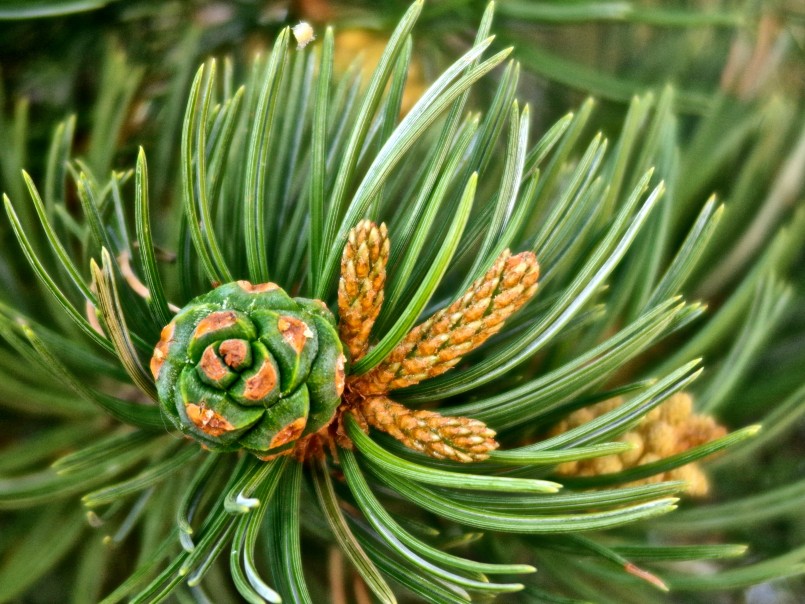
In the American Southwest, there is not the diversity of tree species that exist in Appalachia. Fortunately, the trees that are available to us are truly gifts from the earth. One of my favorites is the pinon pine, which is common throughout the Four Corners area and the Colorado Plateau. Family - Pinaceae Pinus edulis (edible pine) Range In Arizona, I have found it as low as 3700’ and as high as 7000’. The general zone is around 5000’-6500’ and often mixed with junipers. Look for it in the upper reaches of a juniper forest, where it transitions to a […] See More