
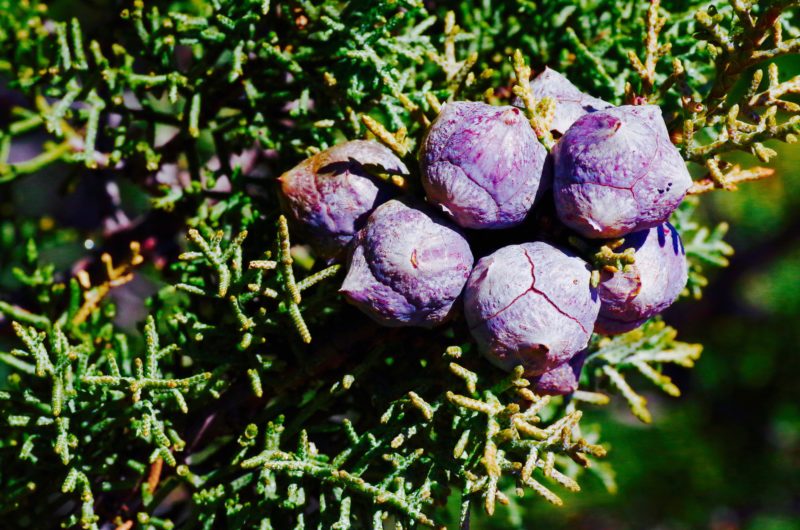
Botanical Name:
Hesperocyparis arizonica
or
Cupressus arizonica
Family:
Cupressaceae
Common Names:
Arizona cypress
Primary Characteristics for Field ID:
Some folks say it resembles juniper. I look for two differences here. The cypress is a bluish green and comes to a point at the tree top while a juniper has a deeper green foliage and its overall silhouette is rounded. They are both in the Cypress family.
Part Used for Medicine:
The fresh growth of the foliage on branch tips in spring and early summer.
Habitat in Which it is Found/ Harvesting Season/ Special Considerations:
Grows in the 3,000’ to 6,000’ range in Arizona. Often found near manzanita bushes around Sedona.
Chemistry:
Volatile oils including the well-known anti-microbial constituents pinene and limonene.
Energetics:
Warming, drying
Herbal Actions:
Anti: fungal + bacterial
Astringent
Therapeutic Uses:
Use as a douche or sitz bath for vaginal candida
Use as a mouthwash for gingivitis
Internal use for many digestive issues that benefit from its warm diffusive effect.
Internal use for traveller’s stomach issues
Herbal Combos:
Use with powdered Canaigre for a mouthwash
Use internally and externally with Chilopsis, White Sage or Larrea for their anti-fungal benefits.
Use as a steam for lung and sinus congestion and infection
The anti-microbial action of its volatile oil makes it helpful in a formula for UTIs.
Preferred Method of Preparation:
Internally as a fresh plant tincture or a tea
Externally as an infused oil, salve, sitz bath
https://plants.usda.gov/core/profile?symbol=HEAR22
The Plant Profiles are brief materia medica summaries of plants encountered during plant walks or introduced during class on our longer programs. They are presented here to help students organize plant info on an ongoing basis. Although the Profiles are not meant to be comprehensive, they are offered here to the public in the hope that others find these pages useful.