
It is recommended to have water with you. Keep extra water in your vehicle, carry it in your pack or cache it in the back country before a longer hike. Sometimes water is available in the back country. While there are many possible sources, they are not equally reliable. This chart breaks down the preferred sources for back country hydration and rates them according to their reliability and ease of use.
Best sources
• Open water: lakes, rivers, ponds
• Seeps and springs – this method requires local knowledge
Good sources
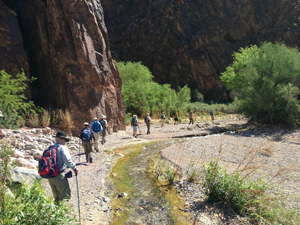
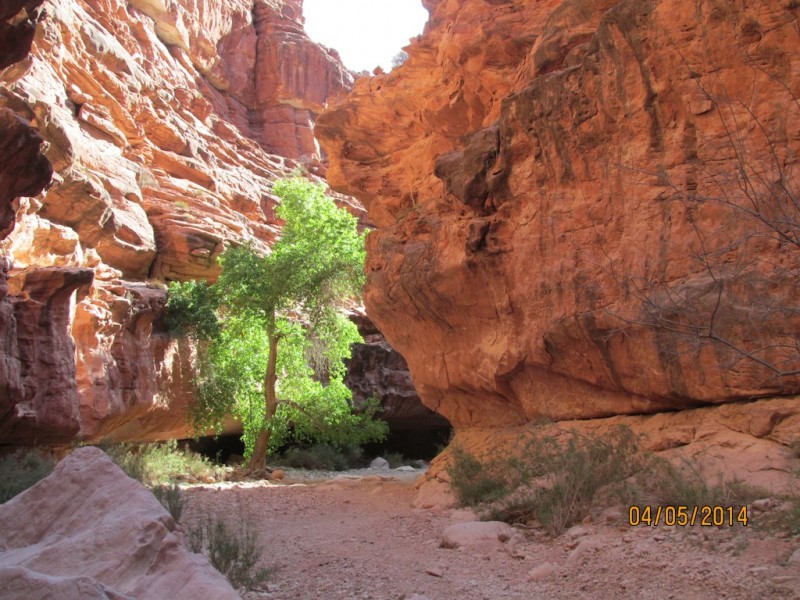
• Water markers in the desert: plants that have larger sized or a deeper green foliage that is unusual for arid climates
• Look for willow, cottonwood, desert willow, cattails
• Windmills in cattle country
Average sources
• Tanks and tinajas can be good but they are seasonal and are often not on the map
• Rain: collect with a tarp into a pot. This method can deliver a good amount of water but it depends on storms and is unpredictable.
• At the base of a cliff or outside meander of dry stream bed: this method requires recent rains and is seasonal
Poor sources
• Dew: minimal amount, quickly evaporates, unpredictable. Dew is rare in the Southwest.
• Animal trails: trails’ convergence is toward water, but distance to the water is unknown.
• Solar still: labor intensive with minimal results, neither recommended nor workable in arid country. A dangerous survival myth.
• Drinking from a cactus: not workable, nauseating, another dangerous survival myth
Hydration Using Snow
• It is OK to eat snow if your body temperature is normal but avoid doing this if hypothermia is an issue.
• Be aware that sharp snow granules may cut mucosa if eating.
• In deep snow, use granular snow for melting. This is found on the bottom layer, close to the ground. It has a higher water content than the fluffy layer near the top.
Snow Melting Methods
• Place snow on black plastic in the sun
• Make a giant marshmallow snowball, about the size of a soccer ball. Put it on a stick and melt near the fire into a pot
• Melt snow directly in a pot, use with a small amount of previously melted water to prevent a burnt taste
• Use a T shirt or pantyhose for a porous container. Fill these with snow and melt near the fire into a pot
• Melting snow with body heat is very inefficient and not recommended