
The Ericaceae family, also known as the Heath family, has fewer plants that are in common use in herbal medicine but they are widely used and an important part of our materia medica.
In general, they like acidic soil and are often some version of a shrub or tree with evergreen leaves. In addition to their therapeutic value, they often have edible berries.
Blueberry – especially high in flavonoids
Cranberry – very high in anti-oxidants. Making a simple relish with fresh, raw cranberries is quite healthy and a world apart, taste-wise, from the jellied fruit served at Thanksgiving.
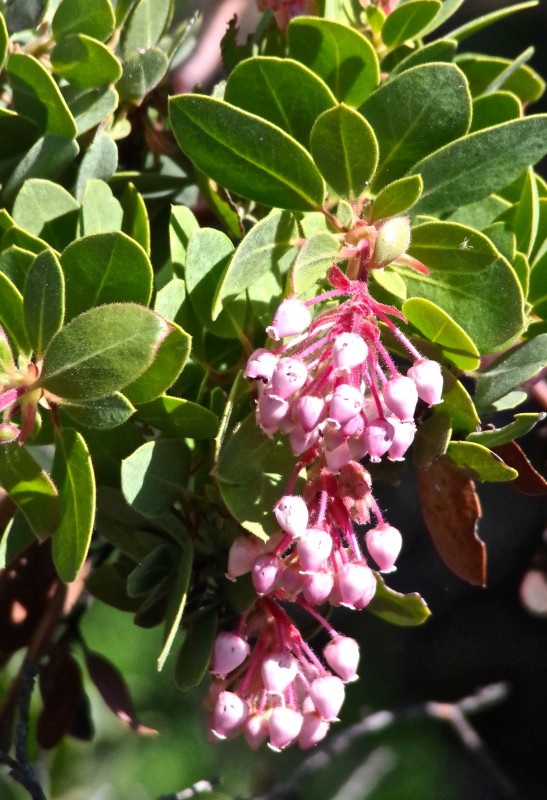
Uva Ursi & Manzanita – in the same genus, Arctostaphylus, the leaves are an essential component of many bladder infection formulas. Manzanita is common in the 4,000-5,000’ zone in Arizona. I have also encountered it as high as 8,000’ in SW Utah.
Uva Ursi is a ground cover found as high as 10,000’ in Colorado.
Pipsissewa is not common in our area. Its use is similar to Manzanita.
Monotropa uniflora, also known as Indian Pipe or Ghost Pipe – a plant I have never encountered in the Four Corners area and one I have not worked with