
sumac, Rhus trilobata, lemonade bush, Anacardaceae, poison oak, poison ivy, poison sumac, Toxicodendron, astringent leaves, edible, staghorn sumac “Arizona Herbal medicine” “Sedona herbal medicine” “Phoenix herbal medicine” “Colorado herbal medicine” “Las Vegas herbal medicine” “Prescott herbal medicine” “Flagstaff herbal medicine” “Oak Creek Canyon” “New Mexico herbal medicine” “Flagstaff essential oil” “Flagstaff essential oils” “Flagstaff aromatherapy” “Prescott essential oil” “Prescott essential oils” “Prescott aromatherapy” “Sedona essential oil” “Sedona essential oils” “Sedona aromatherapy” “Phoenix essential oil” “Phoenix essential oils” “Phoenix aromatherapy” “Las Vegas essential oil” “Las Vegas essential oils” “Las Vegas aromatherapy”

Anacardaceae for Herbalists

Feb 17, 2018 | Botany

Anacardaceae – Commonly known as the Cashew or Sumac Family
Plants in this family can be poisonous, medicinal or edible
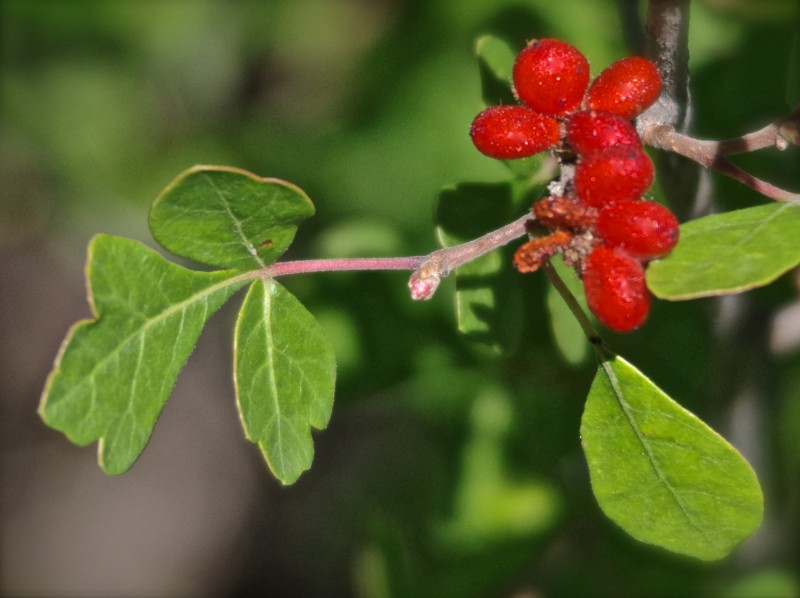
 “Arizona Herbal medicine” “Sedona herbal medicine” “Phoenix herbal medicine” “Colorado herbal medicine” “Las Vegas herbal medicine” “Prescott herbal medicine” “Flagstaff herbal medicine” “Oak Creek Canyon” “New Mexico herbal medicine” sumac, Rhus trilobata, lemonade bush, Anacardaceae, poison oak, poison ivy, poison sumac, Toxicodendron, astringent leaves, edible, staghorn sumac

Rhus trilobata, also known as Lemonade Bush or Three Leaf Sumac. Its flexible branches are used in basket making.

Some edibles are:
Cashew
Mango
Pistachio

The Toxicodendron genus includes poison ivy, poison oak and poison sumac. These plants all contain urushiol oil which gives the leaves a waxy look and causes the infamous itch and skin irritation.

Sumac (Rhus spp.) – Staghorn sumac is more tree-like and is commonly found in disturbed soil at many elevations in the Southwest. The most widespread native sumac between 4,000′ and 7,000′ is Rhus trilobata which has astringent leaves and edible berries.